Recommended action
Send EU Letter 2 first
This campaign is currently focused on the EU Letter 2 / GSP+ monitoring submission. You can open a prefilled email now, or go back to view all available letters before deciding.
EU Letter 2 recipients
- EU Trade – GSP: trade-gsp@ec.europa.eu
- David Mcallister: david.mcallister@europarl.europa.eu
- AFET: afet@europarl.europa.eu
- DROI: droi-secretariat@europarl.europa.eu
- CAB KALLAS: cab-kallas-contact@ec.europa.eu
Please review the draft before sending. Mail apps restrict mailto body content to plain text, so this opens the draft and copies the rich formatted letter for pasting.
Imran Khan Global Campaign
Due process • Humane treatment • Independent medical access

Call for due process, humane treatment, and independent medical access for Imran Khan
This site helps people contact institutions with sourced, prefilled messages and links to primary documents and reputable reporting.
Informational and advocacy only. We avoid definitive medical claims and link to sources for context.
About
Who is Imran Khan?
A brief overview and why international institutions are being contacted.
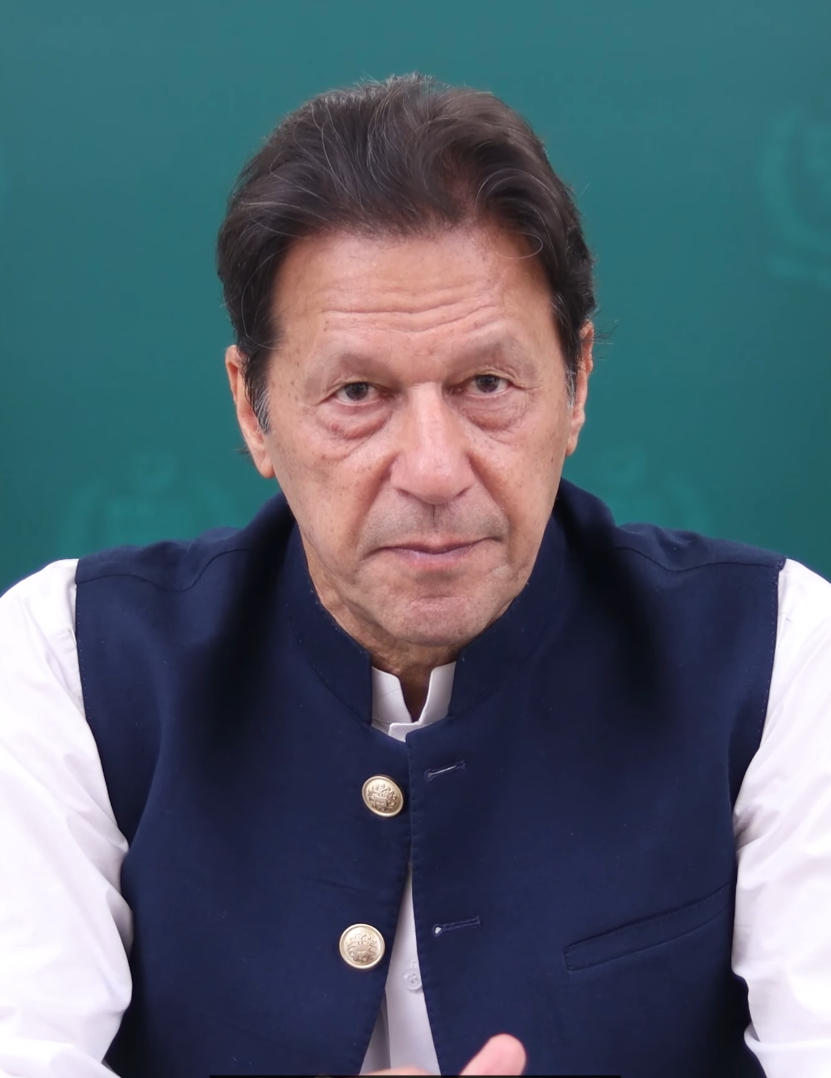
Snapshot
- Former Prime Minister of Pakistan.
- Internationally known as a former cricketer and philanthropist.
- Subject of significant legal and political controversy.
Why a global campaign?
When credible concerns involve detention conditions, due process, or access to independent medical care, public attention and institutional scrutiny can encourage transparency and compliance with international standards.
Context
Reported concerns sourced
We keep this section short and only link to primary documents and reputable reporting.
Independent medical access
Reporting has included claims regarding limited or delayed specialist access and concerns about transparency of medical assessment while in custody.
UN Working Group opinion
The UN Working Group on Arbitrary Detention has issued an opinion with findings and recommendations concerning Imran Ahmad Khan Niazi.
Human rights advocacy
Human rights organisations have raised concerns regarding due process and treatment in custody. We link so readers can evaluate directly.
Take action
Send prefilled advocacy letters
Open an addressed email draft, copy the rich formatted version, or preview the final letter on the page.
Letter 1 — Imran Khan eye emergency
Delivery:
- Organisations are added in To (15 recipients).
Subject:
Arbitrary Detention, Torture Concerns, Medical Negligence, and Imminent Risk to Life of Former Prime Minister Imran Khan
Quick guidance
- Use “Open Mail” to open an addressed draft and copy the formatted letter automatically.
- Click inside the empty message body and paste once. The headings, spacing, bullets, and links will be preserved.
- This avoids the plain-text limitation of mailto links in Outlook and most mail apps.
EU Letter 2
Delivery:
- Organisations are added in To (5 recipients).
Subject:
EU GSP+ Human Rights Monitoring: Pakistan Civil Liberties, Rule of Law and Democratic Governance Concerns
Quick guidance
- Use “Open Mail” to open an addressed draft and copy the formatted letter automatically.
- Click inside the empty message body and paste once. The headings, spacing, bullets, and links will be preserved.
- This avoids the plain-text limitation of mailto links in Outlook and most mail apps.
Formatted preview
Dear Members of the European Commission,
Introduction
I am writing as part of a Pakistani diaspora connect, bringing together overseas Pakistanis and civil society advocates concerned by the continuing deterioration of civil liberties, democratic governance, judicial independence, and fundamental freedoms in Pakistan.
While recent international attention has rightly focused on the detention and treatment of former Prime Minister Imran Khan and his wife Bushra Bibi, these cases reflect a far broader pattern of democratic backsliding and systemic repression. This submission focuses on the wider erosion of civil liberties, freedom of expression, judicial independence, and political rights, all of which are directly relevant to Pakistan's compliance with the international conventions underpinning the European Union's GSP+ framework.
The cumulative findings of United Nations mechanisms, the Inter-Parliamentary Union (IPU), Amnesty International, the Committee to Protect Journalists (CPJ), Reporters Without Borders (RSF), and other international observers demonstrate that these are not isolated incidents, but part of an accelerating pattern affecting democratic governance, rule of law, and fundamental human rights in Pakistan.
Political Participation and Democratic Governance
Serious concerns continue to surround the integrity of Pakistan's democratic institutions and electoral processes. International observers, including the Commonwealth Observer Group, identified significant shortcomings surrounding the February 2024 general elections, including restrictions on political participation, an uneven playing field, limitations on freedoms of expression and assembly, and concerns regarding the transparency and credibility of the electoral process.
These concerns have been compounded by the systematic dismantling of political party Pakistan Tehreek-e-Insaf (PTI), including the imprisonment of its leadership, disqualification of candidates, restrictions on political activity, and continued incarceration of numerous elected representatives and political workers. Democratic governance cannot function effectively where a major political party is prevented from participating on equal terms through judicial, administrative, and coercive measures.
Freedom of Expression, Media Freedom and Digital Criminalisation
Pakistan has witnessed a profound deterioration in freedom of expression and media independence. Journalists have faced intimidation, arbitrary detention, enforced disappearances, abductions, violence, censorship, and restrictions on their ability to report freely.
International press freedom organisations, including the Committee to Protect Journalists (CPJ) and Reporters Without Borders (RSF), have expressed serious concern regarding the targeting of journalists both within Pakistan and abroad. Multiple independent journalists living in self-imposed exile have received life sentences in absentia, while critics of the state have faced intimidation, acid and arson attacks, surveillance, harassment of family members, and other forms of transnational repression extending beyond Pakistan's borders.
The increasing use of Pakistan's Prevention of Electronic Crimes Act (PECA) has further intensified concerns regarding the criminalisation of journalism, online expression, and peaceful criticism of state institutions. Human rights lawyer Imaan Mazari and fellow lawyer Hadi Ali Chattha were sentenced to lengthy terms of imprisonment in connection with online expression critical of state institutions, raising serious concerns regarding freedom of expression, due process, and the misuse of criminal law to silence dissent.
Rule of Law, Judicial Independence and Military Trials
The continued use of military courts to prosecute civilians remains a matter of profound international concern. The United Nations Committee Against Torture (UNCAT), in its 2026 Concluding Observations on Pakistan, expressed concern regarding military trials of civilians, allegations of torture and ill-treatment, arbitrary detention, and denial of fundamental fair trial guarantees, calling upon Pakistan to end the practice and ensure that civilians are tried before independent civilian courts.
International observers including the United Nations have also expressed growing concern regarding constitutional amendments and legislative developments viewed as weakening judicial independence, undermining the separation of powers, and concentrating authority in ways that reduce accountability and effective judicial oversight. These developments erode public confidence in the independence of Pakistan's constitutional institutions and its adherence to the rule of law.
Enforced Disappearances and Arbitrary Detention
Enforced disappearances remain a persistent and deeply troubling feature of Pakistan's human rights landscape. Human rights defenders, political activists, journalists, social media commentators, and their family members continue to face arbitrary detention, enforced disappearance, intimidation, and harassment.
The detention of former Prime Minister Imran Khan and Bushra Bibi, together with concerns raised by the United Nations Working Group on Arbitrary Detention, the Inter-Parliamentary Union, the United Nations Special Rapporteur on Torture, and the United Nations Committee Against Torture, exemplify a broader pattern of arbitrary detention and political repression affecting opposition politicians, civil society actors, and human rights defenders.
Pakistan's Obligations under the EU GSP+ Framework
These developments are directly relevant to Pakistan's obligations under the European Union's GSP+ framework, which is founded upon the effective implementation—not merely the formal ratification—of 27 international conventions relating to human rights, labour rights, environmental protection, good governance, democracy, and the rule of law.
The cumulative findings of United Nations treaty bodies, Special Rapporteurs, international human rights organisations, parliamentary institutions, and press freedom organisations raise serious questions regarding Pakistan's continued compliance with these obligations. Continued preferential market access must remain accompanied by meaningful monitoring, accountability, and measurable implementation of international commitments.
Our Requests to the European Union
In light of the European Commission's ongoing GSP+ human rights monitoring process, we respectfully urge the European Union and its Member States to:
Call upon Pakistan to implement without delay the recommendations made by United Nations treaty bodies, Special Rapporteurs, the Inter-Parliamentary Union, and other international human rights mechanisms.
Continue to press for the immediate release of Imran Khan and Bushra Bibi, together with immediate end to their solitary confinement, access to fully independent hospital of their choice.
Call upon Pakistan to immediately end the military trial of civilians, ensure all civilians are tried before independent civilian courts, and uphold fundamental due process guarantees in accordance with its obligations under international human rights law and the recommendations of the United Nations Committee Against Torture.
Urge Pakistan to ensure justice, due process and fair trial guarantees for all political prisoners and individuals detained in connection with the events of 9 May 2023, including prompt review of convictions and proceedings that failed to meet international fair trial standards.
Ensure that continued access to GSP+ preferences remains contingent upon measurable progress in implementing Pakistan's international human rights obligations, including demonstrable improvements in the protection of civil liberties, freedom of expression, judicial independence, and democratic governance.
Closing Remarks
The European Union has consistently affirmed that GSP+ is founded upon respect for fundamental rights, democratic governance, and the rule of law. The current monitoring process presents an important opportunity to ensure that these principles are applied consistently and credibly.
We respectfully urge the European Commission to give careful consideration to the concerns outlined in this submission and to take meaningful action to uphold the integrity of the GSP+ framework and the international human rights obligations upon which it depends.
Thank you for your consideration.
Yours sincerely,
Recipients
Letter 1 recipients
- EU Trade – Civil Society: trade-civil-society@ec.europa.eu
- EU Trade – GSP: trade-gsp@ec.europa.eu
- UN WGAD (Arbitrary Detention): wgad@ohchr.org
- UN Special Rapporteur – Torture: sr-torture@ohchr.org
- UN Special Rapporteur – Health: srhealth@ohchr.org
- UN Human Rights Committee: ccpr@ohchr.org
- UN OHCHR Info Desk: infodesk@ohchr.org
- Commonwealth Secretariat: sg@commonwealth.int
- US House TLHRC: tlhrc@mail.house.gov
- US State Dept – Correspondence: correspondence@state.gov
- US State Dept – DRL Public: drl-public@state.gov
- US State Dept – SCA Press: sca-press@state.gov
- IMF Public Affairs: publicaffairs@imf.org
- World Bank Info: eds19@worldbank.org
- UK Home Office: public.enquiries@homeoffice.gov.uk
EU Letter 2 recipients
- EU Trade – GSP: trade-gsp@ec.europa.eu
- David Mcallister: david.mcallister@europarl.europa.eu
- AFET: afet@europarl.europa.eu
- DROI: droi-secretariat@europarl.europa.eu
- CAB KALLAS: cab-kallas-contact@ec.europa.eu
Sources
Primary documents and reporting
Link these in posts and letters. Keep claims sourced.
Primary documents
Accuracy policy
Avoid definitive medical assertions. When a claim is disputed or unverifiable, label it as “reported” and link to the source.